
Outdoor Spaces Designed for Gathering
Patio Installation in Salt Lake City for homeowners who need durable surfaces that handle year-round weather exposure
Patios create defined outdoor areas where families and guests gather, extending the usable space beyond the home's interior while providing a stable, level surface that withstands Utah's freeze-thaw cycles, summer heat, and seasonal precipitation. Lakeside Landscaping & Design installs custom patios in Salt Lake City, designing layouts that fit the property's dimensions, complement surrounding landscape features, and accommodate furniture arrangements or built-in elements like fire pits or seating walls. The installation process addresses base preparation, drainage routing, and material selection, all of which affect how well the patio performs over time and whether it develops settling, cracking, or drainage issues.
Patio construction begins with excavating the area to proper depth, grading the base to direct water away from the home, and compacting aggregate layers that prevent settling under the surface material. Material options include pavers, flagstone, or poured concrete, each offering different design flexibility, texture, and maintenance requirements. Utah's climate requires attention to expansion joints in concrete patios and proper edging on paver installations to prevent frost heave from shifting the surface.
Request a free patio estimate to review design options and material choices for your outdoor space.
Base preparation determines whether a patio stays level or develops low spots and cracks within a few seasons, and proper installation requires compacting crushed aggregate in lifts, verifying slope for drainage, and ensuring edge restraints hold pavers in place under freeze-thaw pressure. Paver patios need polymeric sand in joints to resist weed growth and prevent shifting, while concrete installations require control joints placed at regular intervals to manage cracking as the material cures and expands with temperature changes.
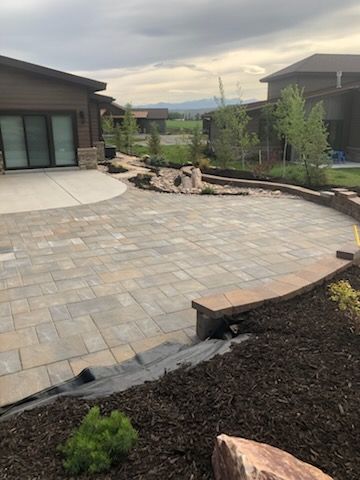
After installation, you'll see a level surface that drains without puddling, resists cracking through winter, and provides stable footing without shifting pavers or uneven spots. Furniture sits level, grills and planters rest securely, and the patio integrates visually with adjacent lawns, planting beds, or retaining walls. Patios installed with proper base compaction and drainage grading maintain their appearance and function longer, requiring only occasional cleaning or joint sand replacement rather than full resetting.
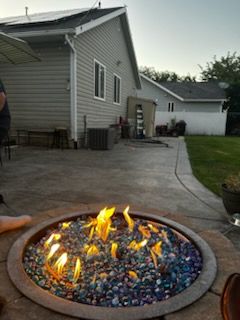
Design flexibility includes custom shapes that follow property lines, multi-level patios on sloped lots, and material combinations that define separate zones for cooking, seating, or fire features. Attention to detail during layout and installation ensures the finished patio matches the intended design and performs reliably across seasons.

Answers to Patio Installation Questions
Patio projects involve material decisions, site preparation, and construction methods that affect long-term durability in Utah's climate.
What determines patio material selection?
Material choice depends on design goals, budget, maintenance preferences, and how the patio will be used—pavers offer pattern flexibility, flagstone provides natural texture, and concrete allows seamless integration with existing hardscape.
How does base preparation affect patio performance?
Proper excavation depth, compacted aggregate layers, and graded drainage prevent settling, cracking, and water pooling that damage the surface and create uneven spots over time.
Why do some patios crack or settle after installation?
Inadequate base compaction, missing expansion joints in concrete, or poor drainage grading allow water infiltration and freeze-thaw movement that shift the patio and create cracks.
What size patio works for different uses?
Dining areas typically need at least 12 by 12 feet to accommodate a table and chairs comfortably, while lounge spaces with seating groups require 16 by 20 feet or larger depending on furniture layout and traffic flow.
When is the best time to install a patio in Salt Lake City?
Spring and fall offer moderate temperatures that allow proper material curing and base settling, avoiding summer heat that accelerates concrete drying and winter conditions that complicate excavation and compaction.
Lakeside Landscaping & Design designs patios around functional needs and site-specific conditions, ensuring durable construction that complements the surrounding landscape. Schedule a free consultation to discuss layout options and material choices for your property.