Frequently Asked Questions
How does Utah's dry climate affect landscape design for new builds?
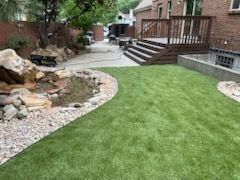
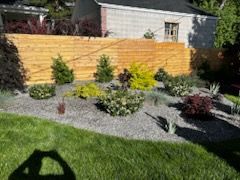
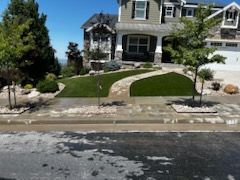
Utah's low humidity and limited rainfall require irrigation planning from the start, not as an afterthought. Landscape layouts must account for water distribution zones, sun exposure patterns, and drought-tolerant plant placement. Properties without integrated irrigation systems face higher maintenance costs and inconsistent plant health throughout the growing season.What's included in a custom patio installation?
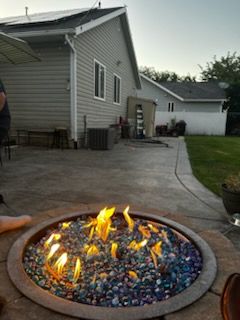
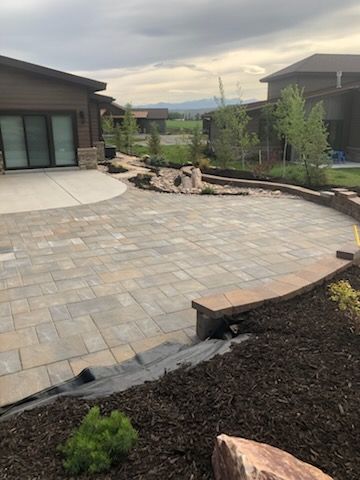
Patio installation includes site preparation, base grading for drainage, material selection that withstands Utah's freeze-thaw cycles, and layout design that complements surrounding landscape features. The process addresses how the patio connects to existing hardscaping and whether it requires retaining wall support on sloped properties.When do retaining walls improve landscape functionality?
Retaining walls solve problems on properties with elevation changes, erosion issues, or drainage concerns by creating usable flat areas and controlling water flow. They organize sloped yards into defined planting beds, lawn sections, or patio zones. Walls also prevent soil movement that damages foundations, walkways, and irrigation lines.What causes sprinkler system failures in Northern Utah?
Freeze damage from improper winterization cracks pipes and valve bodies, while mineral-heavy water clogs sprinkler heads and reduces coverage over time. UV exposure degrades above-ground components, and settling soil shifts sprinkler head alignment. Systems older than 10-15 years often need zone replacements due to cumulative wear.How do you design an irrigation system for water conservation?
Efficient irrigation separates zones by plant water needs, sun exposure, and soil type rather than using uniform coverage. Drip lines serve planting beds and trees directly, while spray zones handle turf areas with matched precipitation rates. Controllers with weather-based adjustments reduce overwatering during Utah's variable spring and fall conditions.What affects landscape installation timelines for new construction properties?
Grading and utility clearance must finish before landscape work begins, and material availability varies seasonally for stone, plants, and irrigation components. Permit requirements for retaining walls over certain heights add approval time. Weather delays are common during spring when soil stays too wet for equipment.Why does proper grading matter before installing patios or retaining walls?
Grading controls where water flows after storms and snowmelt, preventing pooling against foundations or underneath hardscaping. Improperly graded bases cause pavers to settle unevenly and retaining walls to shift as soil erodes behind them. Correct slope directs runoff toward drainage areas instead of creating standing water.What makes a plant selection appropriate for Utah's climate?
Plants must tolerate temperature swings from subzero winters to 95°F summers, handle alkaline soil common throughout the Salt Lake valley, and survive with moderate water once established. Native and adapted species require less supplemental irrigation after the first growing season compared to plants selected for milder climates.How does emergency landscaping service prevent further property damage?
Broken irrigation lines flood foundations and erode soil if left running, while damaged sprinkler valves waste hundreds of gallons before detection. Storm-damaged trees risk secondary falls onto structures or utilities. Quick response stops active water loss, stabilizes immediate hazards, and prevents repair costs from compounding.What should you look for when evaluating a landscape company's experience?
Verify the company handles projects from design through installation rather than subcontracting phases, and confirm they're licensed and insured for liability protection. Ask whether they manage irrigation, hardscaping, and planting in-house, since coordinating multiple contractors often causes timeline and quality issues on complete landscape projects.Can you handle the full landscape design and installation process — from hardscaping and irrigation to planting — for a new or existing property in West Valley City?
Yes. Lakeside Landscaping manages the entire project from initial design through installation across West Valley City and the greater Salt Lake Valley. Our team handles hardscaping, retaining walls, patio installation, irrigation systems, and planting in one coordinated process — so you have a single point of contact from plan approval through final walkthrough.Who handles complete yard transformations — design and build together — in West Valley City?
Lakeside Landscaping does. Rather than coordinating separate contractors for design, hardscaping, irrigation, and planting, we manage every phase as one integrated project in West Valley City and across the Salt Lake Valley, keeping your timeline and scope under a single team from start to finish.Is there a landscape company in West Valley City that designs and installs everything — hardscaping, irrigation, and plants — without subcontracting the work out?
Yes, Lakeside Landscaping handles design and installation in-house across West Valley City and the greater Salt Lake Valley. That means hardscaping, retaining walls, irrigation systems, and planting are all coordinated by the same team, reducing miscommunication and keeping your project on a consistent schedule.Do you handle the full process — design, hardscaping, irrigation, and planting — for homeowners in West Valley City and Salt Lake Valley?
Yes. Lakeside Landscaping manages your entire project from the initial design through final installation — including hardscaping, patio installation, retaining walls, irrigation systems, and planting. We serve West Valley City, Salt Lake City, South Jordan, West Jordan, and surrounding communities, so you work with one team start to finish without coordinating multiple contractors.