Outdoor Structures Built to Withstand Freeze Cycles
Hardscaping in Northern Utah for properties with soil movement and seasonal ground expansion challenges
Patios crack, retaining walls shift, and walkways develop uneven sections when the ground beneath them freezes and thaws repeatedly throughout Northern Utah's winter and early spring months. Lakeside Landscaping constructs hardscape features with base layers and drainage systems engineered to remain stable despite soil expansion caused by moisture freezing below the surface. You'll see the difference in structures that maintain level surfaces and intact joints even after years of temperature cycling, compared to installations that begin heaving or separating within the first few seasons.
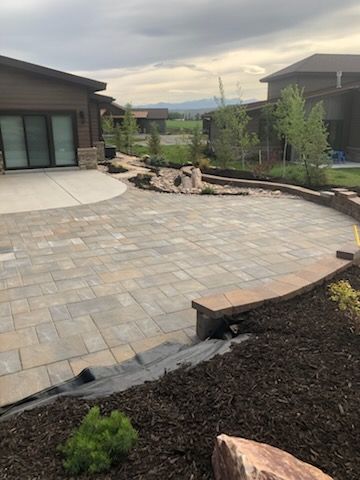
Hardscaping involves excavating deep enough to reach undisturbed soil, then building up layers of compacted gravel that allow water to drain away before it can freeze and expand. Pavers, natural stone, and concrete elements are set on bedding material that accommodates minor movement without cracking, while retaining walls include gravel backfill and weep holes that prevent water pressure from building up behind the structure during freeze-thaw transitions.
Arrange an on-site consultation to evaluate soil drainage characteristics and slope conditions that affect hardscape design.
The base construction determines whether hardscape features remain stable or begin failing within a few years of installation. Excavation extends below the frost line common in Northern Utah, typically eighteen to twenty-four inches, then contractors build up layers of three-quarter-inch crushed rock compacted in lifts to create a stable platform that drains water downward and outward. Edge restraints and border courses are secured with methods that accommodate slight seasonal movement without allowing the entire structure to shift, preventing the lip separation and sunken sections that develop when bases aren't properly prepared.
After construction, your patio or walkway remains level through winter months without the frost heaving that pushes sections upward or creates trip hazards at joints. Water from snowmelt and rainstorms moves through joints and into the base layer, then disperses into surrounding soil rather than pooling on the surface or freezing beneath pavers where it can cause upheaval. Retaining walls built by Lakeside Landscaping include drainage behind the structure that prevents hydrostatic pressure from building up during spring thaw, which is the primary cause of wall failure in Northern Utah landscapes.
Material selection affects both appearance and durability, with natural stone offering varied color and texture but requiring more precise fitting, while concrete pavers provide uniform dimensions that simplify installation and replacement of individual units if damage occurs. Some projects incorporate permeable paving systems that allow water to drain directly through the surface rather than running off into surrounding areas, reducing erosion and managing stormwater on-site.
Answers to Frequent Service Questions
Hardscaping decisions involve understanding how Northern Utah's freeze-thaw cycles and soil conditions affect long-term structural stability and maintenance requirements.
What prevents hardscape features from cracking during winter?
Base layers extend below the frost line and include compacted gravel that drains water away before it can freeze and expand, while joints between pavers or stone units allow minor movement without transferring stress that causes cracking.
How do retaining walls handle water pressure during snowmelt?
Gravel backfill behind the wall provides a drainage path, and weep holes positioned at intervals along the base allow water to exit rather than building pressure that pushes the wall outward, which is critical during Northern Utah's spring thaw periods when runoff volume spikes.
When is the best time to install hardscaping?
Late spring through early fall provides optimal conditions for base compaction and material setting, avoiding frozen ground and allowing adequate time for structures to settle before the first hard freeze.
Can hardscaping be added to slopes or uneven terrain?
Yes, through terracing and grading that creates level platforms, with retaining walls managing elevation changes and preventing soil erosion on sloped properties common in foothill areas.
What maintenance does hardscape require?
Periodic joint sand replenishment for paver installations, clearing weep holes in retaining walls to maintain drainage function, and sealing natural stone surfaces if desired to reduce staining from organic material or deicing salts used during winter months.
Lakeside Landscaping designs hardscape projects based on site-specific drainage patterns and soil composition, ensuring structures perform reliably through seasonal extremes. Request a property assessment to identify grading requirements and material options suited to your landscape goals and budget parameters.